
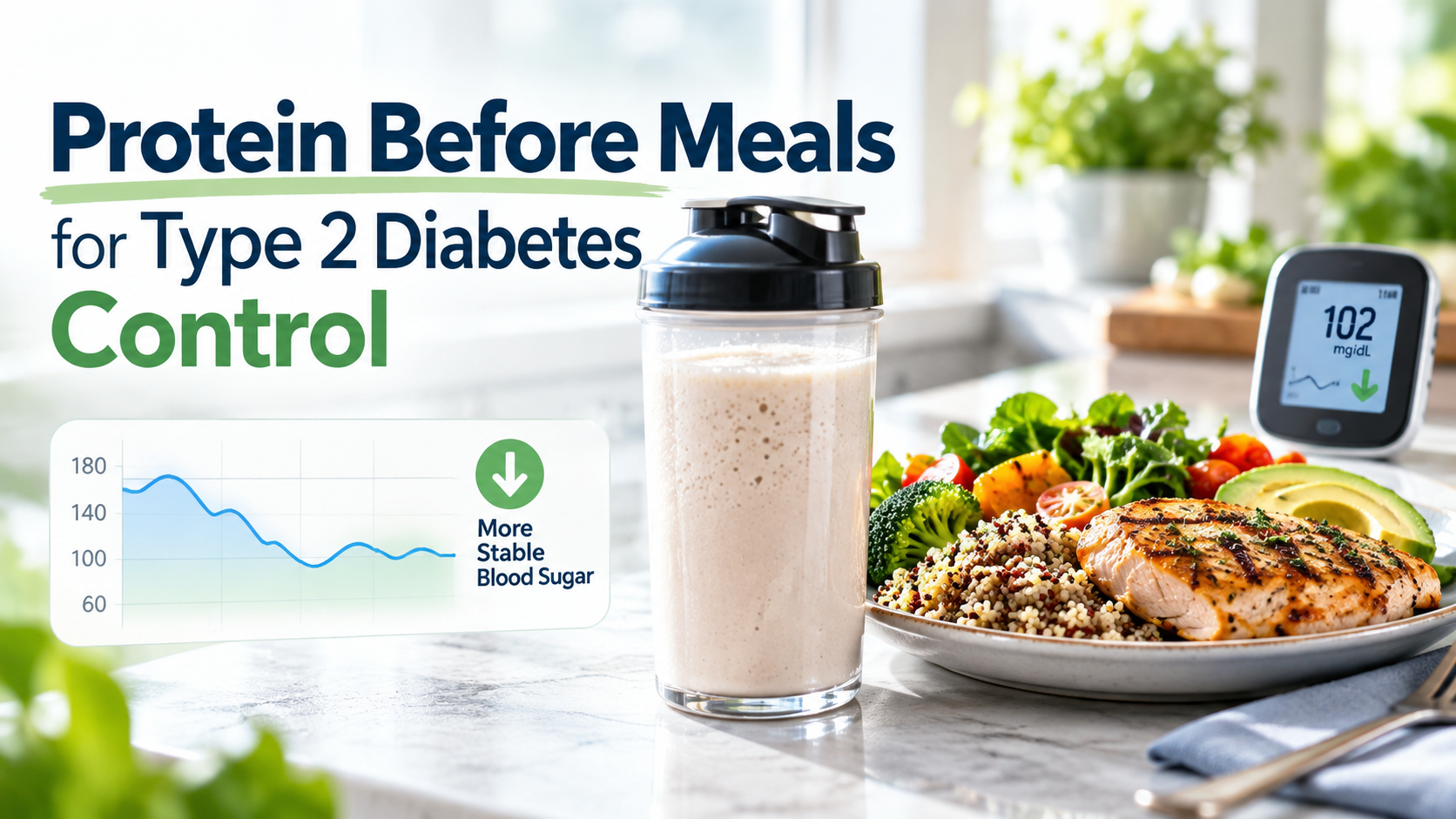
Protein intake before meal is good for Type to dibates contorl
Blood sugar can rise rapidly after a carbohydrate-containing meal, and repeated post-meal glucose spikes can make type 2 diabetes harder to manage. This is why researchers have become increasingly interested not only in what people eat, but also in the order and timing of nutrients. One strategy receiving particular attention is consuming a small amount of protein, especially whey protein, shortly before a meal.
Human randomized trials and systematic reviews suggest that a pre-meal whey protein serving may reduce the rise in blood glucose after eating by stimulating insulin and gut hormones while slowing the rate at which food leaves the stomach. However, this should be viewed as a nutrition strategy—not a replacement for diabetes medication, exercise, weight management, glucose monitoring, or medical nutrition therapy.
This guide explains how protein before meals may affect type 2 diabetes control, what the science actually shows, practical timing and serving-size considerations, and who should speak with a healthcare professional before trying it.
Protein intake before meal is good for Type to dibates contorl benifits
The strongest evidence for protein before meals involves whey protein. Whey is rapidly digested and contains essential amino acids, including branched-chain amino acids such as leucine. Its metabolic effects appear to go beyond simply adding protein to the diet.
A 2023 systematic review and meta-analysis published in the American Journal of Clinical Nutrition evaluated 16 randomized crossover trials involving 244 participants. Researchers found that whey protein consumed before a meal reduced peak post-meal glucose compared with a control drink. The analysis also found increased insulin responses and slower gastric emptying. The glucose-lowering effect appeared to be particularly noticeable in participants with type 2 diabetes.
Another meta-analysis focused specifically on people with type 2 diabetes and found lower post-meal glucose concentrations at both 60 and 120 minutes following whey supplementation. However, the researchers emphasized that the number of participants was relatively small and that more long-term trials are needed.
This distinction matters. Evidence supports the idea that pre-meal protein can influence postprandial glucose—the blood glucose rise after eating—but this does not mean protein supplements cure, reverse, or independently control type 2 diabetes.
For people who already use protein supplements for fitness, muscle maintenance, or convenient nutrition, timing some of that protein before a carbohydrate-containing meal may therefore be worth discussing with a doctor or registered dietitian.
Scientific explanation / How it works
Several biological mechanisms may explain why whey protein before a meal changes the glucose response.
1. Whey protein can stimulate insulin secretion
When protein is digested, amino acids enter the bloodstream. Certain amino acids can stimulate pancreatic beta cells and increase insulin secretion. Insulin allows glucose to move from the bloodstream into tissues such as skeletal muscle.
Whey appears to produce a particularly strong insulin response compared with many other protein sources. When consumed shortly before carbohydrates, this insulin response may begin before much of the glucose from the meal has entered the bloodstream.
This can help explain why glucose peaks after the meal may be lower even though the meal itself has not necessarily changed.
2. It can stimulate GLP-1 and other gut hormones
Protein entering the digestive system can stimulate incretin hormones such as glucagon-like peptide-1, commonly called GLP-1, and glucose-dependent insulinotropic polypeptide, or GIP.
These hormones are part of the body's normal system for preparing for incoming nutrients. GLP-1 can enhance glucose-dependent insulin secretion and influence appetite and digestive speed.
This does not mean that whey protein acts the same way as prescription GLP-1 receptor agonist medications. The size, duration, and pharmacological effects are very different. It simply means that natural GLP-1 secretion is one of several mechanisms researchers believe contributes to the glucose response seen after whey consumption.
3. Protein may slow gastric emptying
The rate at which food moves from the stomach into the small intestine strongly influences how quickly carbohydrates appear in the bloodstream as glucose.
Several whey-preload studies have observed slower gastric emptying. When carbohydrates reach the small intestine more gradually, glucose may enter the circulation at a slower rate, producing a smaller glucose peak.
This mechanism also explains why people with diagnosed gastroparesis need individualized advice. Further slowing of gastric emptying is not necessarily desirable for everyone.
4. Protein can improve satiety
Adequate protein tends to be more satiating than rapidly digested refined carbohydrates. Increased fullness may help some people control portions and reduce unnecessary snacking later in the day.
For people combining diabetes management with fat-loss goals, maintaining adequate protein can also help support lean muscle when total calorie intake is reduced—especially when combined with resistance training.
5. Muscle provides an important destination for glucose
Skeletal muscle is one of the body's major tissues for glucose disposal. Protein alone does not eliminate insulin resistance, but consuming sufficient dietary protein while performing regular resistance exercise can help preserve or build lean mass.
That makes a fitness-focused diabetes strategy broader than simply drinking a shake before meals. Protein intake, resistance training, daily movement, sleep, body composition, carbohydrate quality, medication adherence, and overall calorie balance all matter.
Benefits
Based on available research, potential benefits of strategically consuming protein before a meal include:
- Lower post-meal glucose peaks: Whey preloads have reduced postprandial glucose concentrations in controlled trials, particularly after carbohydrate-containing meals.
- More gradual glucose appearance: Slower gastric emptying may reduce how rapidly glucose reaches the bloodstream.
- Increased meal-related insulin response: Whey amino acids and incretin hormones can stimulate insulin secretion, potentially helping the body handle incoming carbohydrate.
- Improved satiety: Protein before or with a meal may increase fullness and make portion control easier for some people.
- Support for lean muscle: Adequate dietary protein combined with resistance training supports muscle maintenance, which is especially important during weight loss and healthy aging.
- Convenient protein intake: Whey isolate can provide protein without requiring another large solid-food portion immediately before a meal.
- Potential improvement in daily glucose patterns: A small seven-day crossover study using 15 g of whey before breakfast, lunch, and dinner found participants with type 2 diabetes spent approximately two additional hours per day within the study's target glucose range compared with placebo.
- Useful addition to a fitness-oriented meal plan: People already tracking protein for strength training may be able to distribute their existing daily protein differently instead of simply adding large amounts of extra protein.
The final point is important. If someone already consumes enough protein, pre-meal protein does not automatically mean they should dramatically increase total daily intake. In many cases, redistributing existing protein intake may make more sense.
Risks / Side effects
Protein and whey supplements are generally well tolerated by many adults, but “more” is not automatically better, particularly when diabetes, kidney disease, medications, or digestive disorders are involved.
Hypoglycemia considerations
People using insulin or medications that stimulate insulin secretion may have a higher risk of low blood glucose when changing meal composition, carbohydrate intake, meal timing, exercise, or other factors that affect glucose.
Because pre-meal whey can reduce the post-meal glucose response, anyone taking glucose-lowering medication should discuss significant dietary changes with their clinician and monitor glucose appropriately. Do not reduce or stop diabetes medication because a protein supplement appears to improve glucose readings.
Kidney disease
Type 2 diabetes can coexist with chronic kidney disease. Protein targets can therefore be very different from those of a healthy strength-training athlete.
The American Diabetes Association's 2026 Standards of Care recommend around 0.8 g of protein per kilogram of body weight per day for people with stage G3 or more advanced non-dialysis chronic kidney disease. The ADA also advises avoiding very high protein intake in this group, particularly above approximately 1.3 g/kg/day.
Anyone with reduced kidney function, significant albumin in the urine, dialysis treatment, or known kidney disease should obtain an individualized protein target from their healthcare team rather than following generic fitness-protein recommendations.
Digestive symptoms
Some people experience bloating, nausea, stomach discomfort, or changes in bowel movements after whey products. Whey isolate generally contains less lactose than whey concentrate, but the exact lactose content depends on the product.
People with lactose intolerance should check the label and assess individual tolerance.
Milk allergy
Whey comes from milk. People with a true cow's-milk protein allergy should not assume that whey isolate is safe merely because it contains little lactose. Lactose intolerance and milk-protein allergy are different conditions.
Gastroparesis
Because whey may slow gastric emptying, people with diabetic gastroparesis, persistent nausea, vomiting, severe reflux, unusual fullness after small meals, or diagnosed gastric-emptying disorders should seek professional guidance before experimenting with protein preloads.
Extra calories
A protein shake still provides calories. Adding several protein drinks each day on top of an unchanged diet can increase daily energy intake. For someone trying to lose body fat, this may reduce or eliminate the calorie deficit.
A better approach is often to include the protein within the person's existing calorie and protein targets rather than treating it as unlimited “free” nutrition.
Who should use / Who should avoid
A pre-meal protein strategy may be worth discussing with a healthcare professional for adults with type 2 diabetes who experience significant post-meal glucose rises, particularly after carbohydrate-rich meals. It may also suit physically active adults who already use protein supplements and want to distribute protein more strategically throughout the day.
It can be particularly practical when a planned meal contains foods such as rice, bread, potatoes, pasta, or other substantial carbohydrate sources. The protein preload should complement a balanced meal—not make vegetables, fiber, portion control, and carbohydrate quality irrelevant.
Extra caution or professional guidance is appropriate for people who:
- Use insulin.
- Use sulfonylureas or other medicines capable of causing hypoglycemia.
- Have chronic kidney disease or reduced kidney function.
- Have diabetic gastroparesis or another gastric-emptying disorder.
- Have a cow's-milk protein allergy.
- Are pregnant or breastfeeding.
- Have significant liver, kidney, or complex metabolic disease.
- Frequently experience unexplained low blood glucose.
- Are following a medically prescribed protein-restricted diet.
Individual glucose responses can differ considerably. Continuous glucose monitoring or clinician-directed glucose checks can provide more useful information than assuming a strategy works simply because it worked in a clinical study.
Best usage guide (dosage, timing)
There is currently no universally approved medical “dose” of whey protein for treating type 2 diabetes. Clinical studies have used substantially different quantities, with a 2023 meta-analysis reporting doses ranging from approximately 4 g to 55 g.
Higher doses are not automatically better. They add more calories and total protein and may be inappropriate for people with kidney disease or specific dietary restrictions.
Two particularly useful clinical examples provide a practical reference point. One free-living crossover study used 15 g of whey protein approximately 10 minutes before breakfast, lunch, and dinner. Another 12-week trial used a drink containing 17 g whey protein plus 5 g guar fiber approximately 15 minutes before two meals per day.
| Situation | Protein Amount | Timing | Practical Note |
|---|---|---|---|
| Research-based low-dose example | 15 g whey protein | About 10 minutes before a meal | Studied before breakfast, lunch and dinner for seven days in a small type 2 diabetes trial. |
| Longer trial example | 17 g whey protein + 5 g guar | About 15 minutes before meals | Used before two daily meals for 12 weeks in adults with relatively well-controlled type 2 diabetes. |
| Conservative practical range to discuss with a professional | Approximately 10–20 g protein | 10–20 minutes before a carbohydrate-containing meal | Total daily protein and calories still need to fit individual requirements. |
| People with CKD | Individualized | Individualized | Do not add pre-meal protein without considering the clinician-prescribed daily protein target. |
If using whey, mixing it with water rather than a sugar-containing beverage avoids adding a large amount of rapidly absorbed carbohydrate immediately before the meal.
Look carefully at the nutrition panel rather than judging a protein powder only by the front label. Consider protein per serving, serving size, total calories, carbohydrates, added sugars, ingredients, allergens, and how the product fits your complete diet.
If whey isolate fits your nutrition plan, you can review the serving information for SUPPS protein before deciding how it would fit into your daily protein target.
For fitness-focused users comparing different protein sources, an Isolate protein can be convenient because it provides a concentrated source of whey protein. People with diabetes should still evaluate the complete nutrition label and use the product as food or supplementation—not as a diabetes treatment.
Comparison table (vs 2-3 alternatives)
Whey protein is not the only way to improve meal composition. The best option depends on individual preferences, calorie requirements, glucose response, medical conditions, and overall diet quality.
| Strategy | Potential Advantage | Limitations | Best Use |
|---|---|---|---|
| Pre-meal whey protein | Human trials show reduced post-meal glucose peaks; convenient; rapidly digested; may stimulate insulin and GLP-1. | Adds calories and protein; unsuitable for milk allergy; requires caution with kidney disease and some medications. | People wanting a convenient, measured protein preload. |
| Whole-food protein before or with the meal | Can provide protein plus vitamins, minerals and greater chewing-related satiety. | Less convenient; effects depend heavily on food choice and serving size. | People who prefer minimally processed foods such as eggs, yogurt, tofu, fish or lean meat. |
| Vegetables or fiber-rich foods first | Fiber can slow carbohydrate absorption, increase fullness and improve overall diet quality. | Does not provide the same amount of complete protein; individual gastrointestinal tolerance varies. | Excellent foundation for most balanced meals. |
| Protein consumed together with the meal | Easy to implement without an additional shake or eating occasion. | May not reproduce exactly the same physiological response observed when whey is consumed before the meal. | People who want a simpler long-term eating routine. |
These strategies do not need to compete with each other. A balanced meal might begin with vegetables and include an adequate portion of lean protein alongside a controlled amount of minimally processed carbohydrate.
For many people with type 2 diabetes, improving the complete dietary pattern is more important than finding one “hack” for glucose control.
FAQ
1. Does drinking protein before a meal lower blood sugar?
Research shows that whey protein consumed shortly before a meal can reduce the rise in blood glucose after eating in some people. The evidence is strongest for short-term post-meal glucose responses. It should not be considered a substitute for prescribed diabetes treatment.
2. How long before eating should I take protein?
Several clinical trials have used whey approximately 10–15 minutes before meals. Research protocols differ, so there is no universally established medical timing recommendation. People taking diabetes medication should discuss changes in meal timing and protein intake with their healthcare professional.
3. How much whey protein should a person with type 2 diabetes take before meals?
Studies have tested a wide range of doses. Small real-world studies have demonstrated effects using around 15–17 g before meals. There is no officially established therapeutic dose for diabetes. Total daily protein requirements, kidney function, medication, calorie intake and fitness goals should determine the appropriate amount.
4. Is whey isolate better than whey concentrate for people with diabetes?
Whey isolate generally provides a higher percentage of protein and less lactose, fat and carbohydrate than many whey concentrates, but formulations vary. For glucose management, compare the complete nutrition panel—including carbohydrates, added sugars, calories and serving size—rather than relying only on the words “isolate” or “concentrate.”
5. Can protein before meals replace metformin or other diabetes medication?
No. A nutrition strategy should never be used as a reason to stop, reduce, or replace prescribed medication without medical supervision. Pre-meal protein is being studied as an additional dietary strategy for managing post-meal glucose, not as a replacement for evidence-based diabetes treatment.
Conclusion
The idea that protein intake before meal is good for Type to dibates contorl has a legitimate scientific basis, but the claim needs to be interpreted correctly. Controlled human studies show that whey protein consumed shortly before a meal can reduce post-meal glucose excursions, increase insulin responses, influence gut hormones such as GLP-1, and slow gastric emptying. Small free-living studies also suggest that strategically timed whey may improve daily glucose patterns.
What has not yet been established is that taking protein before every meal produces major long-term improvements in diabetes outcomes for everyone. Larger and longer studies are still needed, and current diabetes guidelines continue to emphasize individualized nutrition rather than prescribing a universal high-protein diet.
A practical strategy for an appropriate adult may be to discuss using approximately 10–20 g of protein shortly before a carbohydrate-containing meal while keeping total daily protein and calories within individualized targets. People taking insulin or glucose-lowering medications, and especially anyone with chronic kidney disease, gastroparesis, or milk allergy, should seek professional guidance first.
Most importantly, protein timing should sit inside a complete strategy: choose high-fiber foods, prioritize vegetables and minimally processed carbohydrates, consume adequate protein, exercise regularly, maintain or build muscle, manage body weight where appropriate, monitor glucose, and follow prescribed medical treatment.
If whey isolate already fits your fitness and nutrition plan, review the nutrition information and serving size of SUPPS protein and discuss how the serving fits your personal daily protein target with a qualified healthcare professional.
Medical disclaimer: This article is for educational purposes only and does not provide medical advice, diagnosis, or treatment. People with diabetes should consult their physician, endocrinologist, or registered dietitian before making major changes to protein intake, supplements, meal timing, or diabetes medication.