
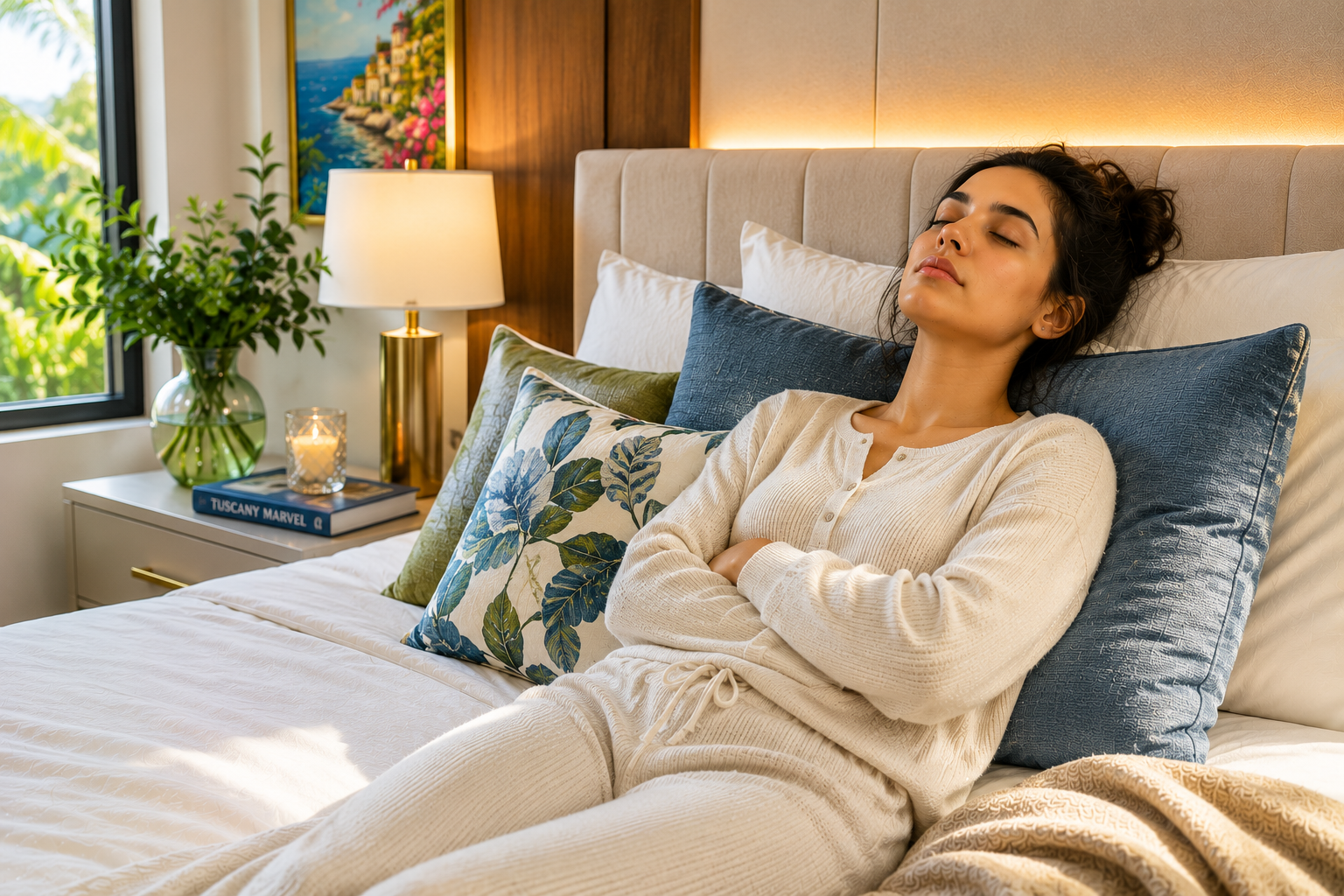
The Top 3 Ingredients to Help You Get a Better Night's Sleep
You train hard, eat clean, and track your macros — yet you still wake up exhausted, foggy, and under-recovered. Poor sleep is one of the most overlooked performance killers in fitness. Research from the National Sleep Foundation confirms that adults who log fewer than seven hours per night show measurably lower testosterone, elevated cortisol, impaired muscle protein synthesis, and slower reaction times. If your progress has plateaued despite doing everything right in the gym, the missing variable is almost certainly happening at night. The good news: science has identified a handful of natural compounds that directly support the mechanisms of sleep onset, sleep depth, and overnight recovery — and three of them stand above the rest.
The Top 3 Ingredients to Help You Get a Better Night's Sleep
After reviewing the clinical literature, three compounds consistently outperform the rest for improving sleep quality in active adults: Magnesium Glycinate, L-Theanine, and Ashwagandha (KSM-66®). Each one targets a distinct physiological pathway — neuromuscular relaxation, cortical calm, and cortisol regulation, respectively — making them highly complementary when used together.
1. Magnesium Glycinate
Magnesium is a cofactor in over 300 enzymatic reactions, including those that regulate GABA receptors — the brain's primary inhibitory neurotransmitter system. The glycinate chelate form offers superior bioavailability and minimal GI upset compared to cheaper forms like magnesium oxide. Studies show that magnesium-deficient individuals (which includes the majority of people eating a Western diet) have significantly disrupted sleep architecture, including less slow-wave (deep) sleep.
2. L-Theanine
L-Theanine is a non-protein amino acid found almost exclusively in green tea. At doses of 100–400 mg, it selectively elevates alpha brain-wave activity — the same neurological state associated with relaxed alertness during meditation. Critically, it does this without inducing sedation, making it ideal for individuals who struggle with racing thoughts at bedtime. Multiple double-blind, placebo-controlled trials confirm L-Theanine reduces sleep onset latency and improves subjective sleep quality without morning grogginess.
3. Ashwagandha (KSM-66®)
Ashwagandha is an adaptogenic root used in Ayurvedic medicine for over 3,000 years. The KSM-66® extract is the most clinically validated form, standardised to ≥5% withanolides. Its mechanism of action targets the HPA (hypothalamic-pituitary-adrenal) axis, blunting the cortisol spike that keeps stress-sensitive sleepers wide-awake at night. A 2019 double-blind RCT published in Medicine found that 300 mg of KSM-66® twice daily significantly improved sleep onset, total sleep time, and sleep efficiency scores compared to placebo.
The Science Behind These Sleep Ingredients — How They Work
Understanding why these three ingredients work requires a brief look at the neuroscience of sleep.
GABA and the Magnesium Connection: GABA (gamma-aminobutyric acid) is the neurotransmitter responsible for quieting the nervous system. Magnesium acts as a natural NMDA receptor antagonist, preventing calcium from over-exciting neurons. When magnesium levels are insufficient, the nervous system remains in a hyperexcitable state — making it biologically harder to fall and stay asleep. Supplementing with magnesium glycinate restores this inhibitory tone, particularly in slow-wave sleep stages that are most restorative for muscle recovery.
Alpha Waves and L-Theanine: EEG studies confirm that oral L-Theanine administration increases alpha-band oscillations in the occipital and parietal cortex within 30–60 minutes. Alpha activity suppresses the high-frequency beta waves associated with analytical thinking and anxiety. This is why L-Theanine is particularly effective for "overthinkers" — people whose minds race the moment they hit the pillow. When stacked with a low dose of magnesium, the synergy is amplified because both compounds operate upstream of GABA signalling.
Cortisol and Ashwagandha's Adaptogenic Mechanism: Cortisol follows a diurnal rhythm — it should be highest in the morning and lowest at night. Chronic stress, overtraining, and poor sleep create a dysregulated pattern where cortisol remains elevated in the evening, directly suppressing melatonin production and delaying sleep onset. KSM-66® ashwagandha contains withanolides that modulate the HPA axis response, reducing peak cortisol output by up to 27.9% in clinical trials. This allows the body's natural melatonin rise to proceed uninhibited.
Key Benefits of Magnesium, L-Theanine, and Ashwagandha for Sleep
- Faster sleep onset: L-Theanine reduces sleep latency by calming cortical hyperactivity, helping you fall asleep in less time without pharmaceutical sedation.
- Deeper, more restorative sleep: Magnesium glycinate promotes slow-wave (Stage 3) sleep — the phase in which growth hormone is released and muscle tissue is repaired.
- Lower nighttime cortisol: Ashwagandha KSM-66® normalises the evening cortisol profile, removing the primary biochemical barrier to melatonin secretion.
- Reduced next-day fatigue: Improved sleep architecture means more time in REM and deep sleep, translating to significantly better energy, focus, and mood upon waking.
- Better recovery between training sessions: Slow-wave sleep is the primary window for tissue repair. Higher magnesium and lower cortisol directly amplify the anabolic signalling that happens while you sleep.
- Reduced anxiety and racing thoughts: All three compounds have documented anxiolytic properties independent of their sleep-specific effects, creating a calmer pre-sleep state.
- Non-habit-forming: Unlike prescription sleep aids or OTC antihistamines (diphenhydramine), none of these ingredients cause dependence, tolerance, or rebound insomnia.
👉 Stack your recovery: If you're training seriously, pair these sleep ingredients with a clean protein source to maximise overnight muscle protein synthesis. SUPPS Erotes Whey Isolate | Grass Fed Whey Protein is an ideal pre-sleep option — fast-absorbing, leucine-rich, and sourced from grass-fed cows.
Risks and Side Effects to Be Aware Of
All three ingredients have strong safety profiles when used at evidence-based doses, but no supplement is entirely without risk. Here's what the clinical literature actually shows:
Magnesium Glycinate: Generally very well tolerated. The most common side effect at higher doses (above 400 mg) is loose stools, though this is far less frequent with the glycinate form than with magnesium citrate or oxide. Individuals with kidney disease should exercise caution and consult a physician, as impaired kidneys cannot efficiently excrete excess magnesium.
L-Theanine: One of the most benign compounds in the supplement world. No serious adverse events have been reported in clinical trials at doses up to 900 mg/day. At very high doses in sensitive individuals, slight headache has occasionally been noted. It does not interact with most medications, though combining it with stimulants (caffeine) will partially blunt theanine's calming effect — intentional in pre-workout formulas, but counterproductive for sleep.
Ashwagandha KSM-66®: Rare cases of liver injury have been reported in individuals taking very high doses for extended periods, though causality is debated in the literature. At standard doses (300–600 mg/day), the compound is well-studied and safe for up to 12 weeks in clinical trials. Pregnant women should avoid ashwagandha entirely, as it may stimulate uterine contractions. It may also interact with thyroid medications and immunosuppressants.
Who Should Use These Ingredients — And Who Should Avoid Them
Ideal Candidates
- Athletes and gym-goers experiencing suboptimal recovery despite proper training and nutrition
- Individuals who struggle with stress-related insomnia or difficulty "switching off" at night
- People who want to avoid pharmaceutical sleep aids and their associated side effects
- Those with confirmed or suspected magnesium deficiency (common in high-sweat athletes)
- Anyone experiencing elevated stress or overtraining syndrome with disrupted sleep as a symptom
Who Should Avoid or Consult a Doctor First
- Pregnant or breastfeeding women — especially regarding ashwagandha
- Individuals with chronic kidney disease — magnesium clearance is impaired
- Those on thyroid medication or immunosuppressants — potential herb-drug interaction with ashwagandha
- People with autoimmune conditions — ashwagandha may modulate immune function
- Anyone with a diagnosed sleep disorder such as sleep apnoea — supplementation will not address the root cause; consult a sleep specialist
👉 Train smarter, not just harder: Poor sleep is often a sign your program is misaligned with your recovery capacity. Use the AI Workout Planner | Free Gym Routine Generator & Personalised Workout Routine | SUPPS to build a periodised plan that accounts for your real-world recovery.
Dosage and Usage Guide
| Ingredient | Evidence-Based Dose | Timing | Form / Notes |
|---|---|---|---|
| Magnesium Glycinate | 200–400 mg elemental magnesium | 30–60 min before bed | Glycinate chelate only; avoid oxide |
| L-Theanine | 100–200 mg | 30–45 min before bed | Standalone or combined with Mg; avoid with caffeine |
| Ashwagandha KSM-66® | 300–600 mg | With dinner or 1 hr before bed | Must be KSM-66® or Sensoril® extract; standardised to ≥5% withanolides |
Comparison: Top Sleep Ingredients vs. Common Alternatives
| Ingredient | Mechanism | Evidence Quality | Habit-Forming? | Best For | Drawbacks |
|---|---|---|---|---|---|
| Magnesium Glycinate | GABA/NMDA modulation | Strong (multiple RCTs) | No | Muscle recovery, deep sleep | GI upset at high doses |
| L-Theanine | Alpha-wave induction | Strong (double-blind trials) | No | Racing thoughts, stress sleepers | Mild effect in isolation |
| Ashwagandha KSM-66® | HPA axis / cortisol regulation | Strong (multiple RCTs) | No | Stress-related insomnia | Slow onset (2–4 weeks) |
| Melatonin | Circadian rhythm signalling | Moderate | Low (chronobiotic, not sedative) | Jet lag, shift workers | Dependence risk at high doses; not ideal for chronic insomnia |
| Valerian Root | GABA modulation (weak) | Mixed / Inconsistent | Low | Mild sleep latency | Strong taste, inconsistent standardisation |
| Diphenhydramine (Benadryl) | H1-receptor antagonist (sedation) | Short-term only | Yes (tolerance builds fast) | Emergency/acute insomnia only | Grogginess, anticholinergic effects, fast tolerance |
👉 Support your overnight rebuild: Combine your sleep stack with a daily creatine protocol to amplify strength and recovery gains. SUPPS Creatine is micronised for maximum absorption and mixes cleanly into any pre- or post-workout drink.
Frequently Asked Questions
Can I take all three ingredients together?
Yes — magnesium glycinate, L-theanine, and ashwagandha KSM-66® have complementary, non-overlapping mechanisms and no known negative interactions. Many premium sleep formulas combine all three for this reason. Start with the lower end of each dosing range and assess your tolerance over the first two weeks.
How long does it take to see results?
L-Theanine and magnesium glycinate often produce noticeable improvements within the first 3–7 nights. Ashwagandha is an adaptogen and works cumulatively — expect its full cortisol-regulating effect to become apparent after 2–4 weeks of consistent daily use.
Will these ingredients make me feel groggy in the morning?
No — this is one of their primary advantages over sedative sleep aids. None of the three compounds produce pharmacological sedation. They improve the quality and architecture of natural sleep rather than forcing unconsciousness, so you wake feeling genuinely rested rather than medicated.
Are these safe to take every night long-term?
Magnesium glycinate and L-theanine are safe for indefinite daily use. Ashwagandha has been studied for up to 12 weeks in RCTs with no safety signals; many practitioners cycle it (8–12 weeks on, 4 weeks off) as a precautionary measure. Consult your physician if you plan to use ashwagandha continuously beyond 12 weeks.
Do these ingredients interact with caffeine?
Magnesium and ashwagandha are unaffected by caffeine. L-Theanine and caffeine are frequently combined intentionally (as in nootropic stacks) because L-Theanine blunts caffeine's jitteriness while preserving focus. For sleep purposes, avoid caffeine for at least 6 hours before bedtime regardless of L-Theanine supplementation, as caffeine's adenosine-blocking half-life (~5–6 hours) will still interfere with sleep pressure.
The Actionable Takeaway: Fix Your Sleep, Fix Your Performance
Sleep is not a passive state — it is the most anabolically active window in your 24-hour cycle. Every hour of compromised sleep reduces the hormonal and neurological conditions your body needs to repair, grow, and perform. Magnesium glycinate, L-theanine, and ashwagandha KSM-66® are the three most evidence-backed natural compounds to correct the biochemical deficits that poor sleep creates: GABA hypofunction, cortical hyperactivation, and dysregulated cortisol.
The practical protocol is straightforward: take 200–400 mg of magnesium glycinate and 100–200 mg of L-theanine 30–45 minutes before bed. Add 300–600 mg of KSM-66® ashwagandha with dinner or 60 minutes before sleep. Keep your sleep environment cool and dark, avoid screens after 9 PM, and give the protocol at least two full weeks before evaluating results.
Stack this sleep foundation with smart nutrition and a periodised training plan, and you will begin to see the kind of recovery gains that separate athletes who plateau from those who keep progressing. Start with what you can control tonight.
👉 Build your complete recovery stack: Explore SUPPS Creatine, SUPPS Erotes Whey Isolate | Grass Fed Whey Protein, and use the AI Workout Planner | Free Gym Routine Generator & Personalised Workout Routine | SUPPS to build a program that lets your sleep stack do its job.