
Which Creatine Is Best for Muscle Gain: The Complete Evidence-Based Guide
You're training hard, eating right, and still feel like your muscle gains have stalled. You've heard about creatine, but the market is flooded with creatine HCL, creatine ethyl ester, buffered creatine, and a dozen other forms — each brand promising it's the "most advanced." The confusion is real, and choosing wrong means wasting both money and results. Here's the truth: decades of peer-reviewed research consistently point to one clear winner. In this guide, we break down exactly which creatine is best for muscle gain, how it works at the cellular level, the correct dosing protocol, and what to avoid — so you make a decision backed by science, not marketing hype.
Which Creatine Is Best for Muscle Gain?
Creatine monohydrate is unambiguously the best form of creatine for muscle gain. It is the most studied sports supplement in history, with over 500 peer-reviewed studies supporting its safety and efficacy. No other form — despite premium pricing — has demonstrated superior results in rigorous, head-to-head clinical trials.
Creatine monohydrate works by saturating your muscle cells with phosphocreatine, the fuel source your body uses for maximal effort contractions lasting under 10 seconds. More phosphocreatine means faster ATP regeneration, which translates directly into more reps, heavier lifts, and — over time — significantly greater lean muscle mass.
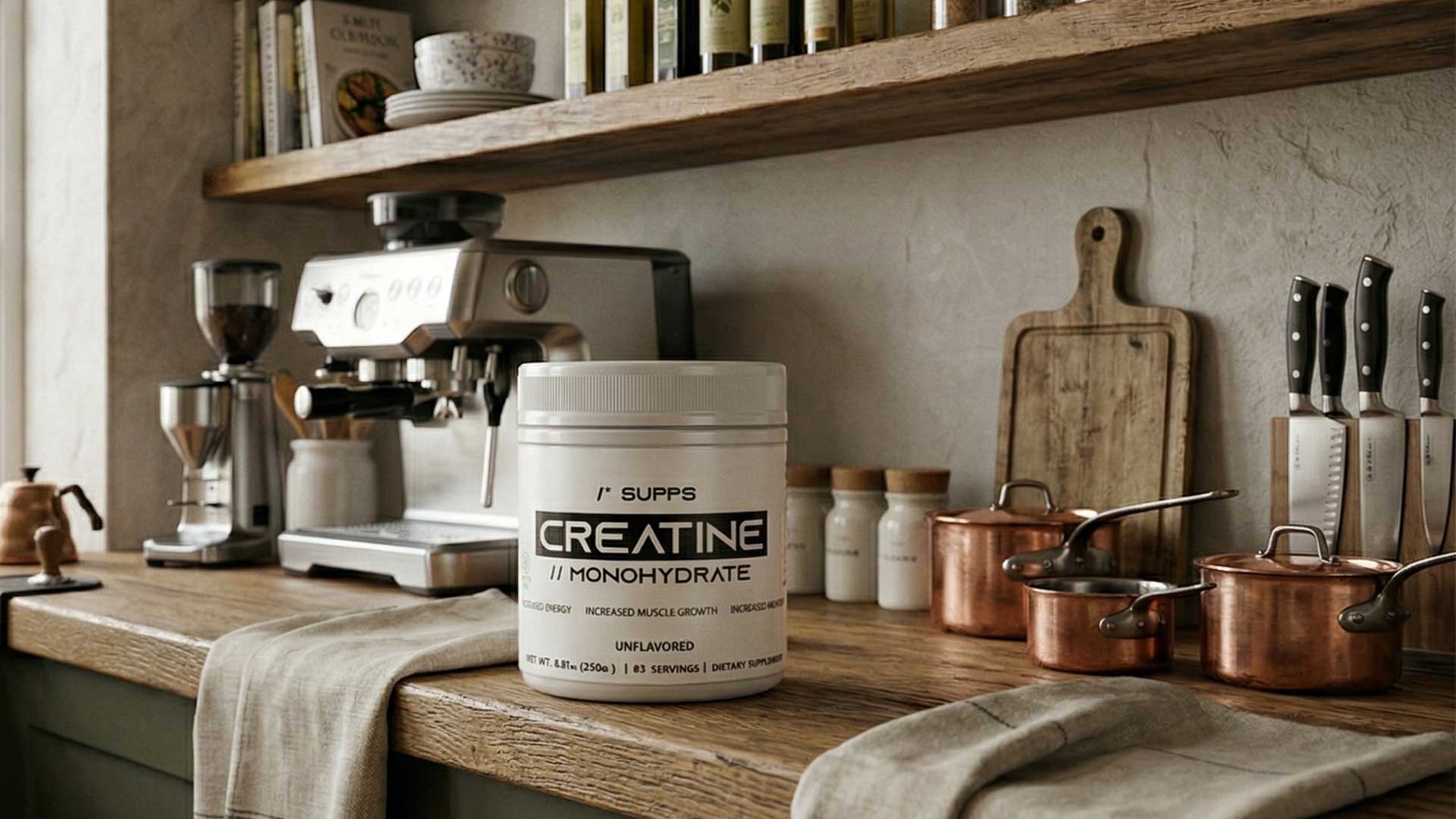
If you want a pharmaceutical-grade, third-party tested creatine monohydrate backed by real results, SUPPS Creatine Monohydrate delivers 5g of pure unflavoured creatine per serving with zero fillers, making it one of the cleanest options on the market today. You can also find it on Amazon India here.
How Creatine Works: The Science Behind the Gains
To understand why creatine monohydrate is so effective, you need to understand the ATP-PCr energy system. ATP (adenosine triphosphate) is the universal energy currency of your cells. During explosive, high-intensity movements — a heavy squat, a sprint, a deadlift max — your muscles burn through ATP stores in roughly 2–3 seconds. Your body then relies on phosphocreatine (PCr), stored in muscle tissue, to rapidly re-synthesise ATP and extend high-intensity output for another 6–8 seconds.
When you supplement with creatine monohydrate, intramuscular phosphocreatine stores increase by approximately 20–40% above baseline. This means your ATP regeneration rate is faster, your muscles fatigue more slowly during explosive efforts, and you can sustain higher training volumes — the primary driver of hypertrophy.
Additionally, creatine supplementation has been shown to increase satellite cell activity and myonuclei density, both critical processes in muscle fibre repair and growth. Research published in the Journal of Strength and Conditioning Research found that subjects supplementing with creatine monohydrate gained an average of 2.2 kg more lean mass over an 8-week resistance training programme compared to a placebo group — without any changes to diet.
Creatine also draws water into muscle cells (cell volumisation), which creates an anabolic environment by increasing protein synthesis signalling and reducing muscle protein breakdown. This is not "water bloat" — it's intracellular hydration that directly supports muscle function and growth.
Key Benefits of Creatine Monohydrate for Muscle Gain
- Increases maximal strength output: Multiple meta-analyses confirm that creatine supplementation increases 1-rep max strength by 5–15% more than training alone, making each session more productive.
- Accelerates lean muscle mass gains: Creatine users consistently gain more lean tissue over 8–12 week training blocks compared to placebo, with studies reporting 1–2 kg additional lean mass — purely from enhanced training capacity.
- Improves high-intensity exercise capacity: Creatine extends the duration of high-effort output (e.g., sets of 6–12 reps) before fatigue sets in, allowing higher training volume — the single biggest predictor of hypertrophy.
- Speeds up muscle recovery between sets: Faster PCr resynthesis means shorter rest periods can be used without sacrificing performance, increasing overall workout density and caloric expenditure.
- Supports cognitive function under fatigue: Emerging research shows creatine also benefits brain energy metabolism, reducing mental fatigue during intense training sessions — keeping your focus sharp when it matters most.
- Safe for long-term use: Studies running up to 5 years of continuous creatine monohydrate supplementation show no adverse effects on kidney, liver, or cardiovascular health in healthy individuals.
- Cost-effective: Creatine monohydrate is one of the most affordable supplements per effective dose, making it accessible regardless of budget without compromising on results.
Pro tip: Pair your creatine with a quality whey isolate to maximise both recovery and muscle protein synthesis post-workout. SUPPS Erotes Isolate Whey provides fast-digesting, high-purity protein that complements creatine perfectly for lean muscle building. You can also grab the SUPPS Whey Protein on Amazon India — it's available in a popular chocolate flavour with excellent amino acid profiles.
Risks and Side Effects: What the Research Actually Says
Creatine monohydrate has one of the strongest safety profiles of any sports supplement. However, it's important to understand the real side effects versus the myths that persist online.
Common (minor) side effects:
- Initial weight gain (1–2 kg): This is intracellular water retention — muscle cells pulling in water. It is not fat gain. Most users notice this in the first week and it plateaus quickly.
- Gastrointestinal discomfort: Rare, but can occur when taking large single doses (10g+). Splitting into two 2.5g servings or mixing with food resolves this for most people.
- Mild cramping: Often linked to inadequate hydration. Drinking an additional 500–750ml of water daily when supplementing with creatine completely prevents this in the vast majority of users.
Common myths that are NOT supported by evidence:
- Creatine does not cause kidney damage in healthy individuals — multiple long-term studies confirm this.
- Creatine does not cause hair loss — the one study suggesting this (DHT elevation) used creatine loading in rugby players and has never been replicated.
- Creatine does not need to be cycled — there is no physiological basis for cycling creatine, and continuous use is safe and equally effective.
As always, if you have pre-existing kidney conditions or are on diuretics, consult your physician before supplementing.
Who Should Use Creatine — and Who Should Avoid It
Ideal candidates for creatine supplementation:
- Resistance trainers and bodybuilders seeking accelerated lean muscle gain
- Athletes in power and strength sports (powerlifting, sprinting, football, basketball)
- Vegetarians and vegans — who naturally have lower baseline creatine stores from diet and thus see the most dramatic response
- Older adults (40+) looking to preserve muscle mass and counteract age-related strength decline (sarcopenia)
- Anyone whose training has plateaued and who wants a safe, legal performance boost
Who should avoid or proceed with caution:
- Individuals with diagnosed kidney disease or chronic renal impairment — consult a doctor first
- Those with bipolar disorder — some evidence suggests creatine may affect dopamine metabolism; speak with your psychiatrist before use
- Pregnant or breastfeeding women — insufficient research exists to confirm safety; avoid as a precaution
- Children under 18 — not recommended due to limited paediatric research
Best Usage Guide: Dosage, Timing, and Protocol
One of the most common mistakes people make with creatine is either over-complicating the dosing or abandoning it because they "don't feel anything." Creatine works cumulatively — it saturates your muscles over days and weeks, not hours. Here's the exact protocol backed by research:
Dosage Chart
| Protocol | Daily Dose | Duration to Saturation | Best For |
|---|---|---|---|
| Standard (Maintenance) | 3–5g per day | ~28 days | Most users; simple and effective |
| Loading Phase | 20g/day (4 × 5g doses) | 5–7 days | Athletes wanting faster saturation |
| Post-Loading Maintenance | 3–5g per day | Ongoing after loading | Maintaining saturation after loading |
| Larger body weight (>90kg) | 5–10g per day | ~28 days | Heavier athletes needing higher saturation |
Timing: Contrary to popular belief, creatine timing is not critical — because it works by accumulation. However, post-workout supplementation (taken with a carbohydrate + protein meal or shake) may offer a marginal benefit due to elevated insulin sensitivity enhancing creatine uptake into muscle cells. On rest days, take it with any meal.
Practical tip: Mix SUPPS Creatine directly into your post-workout protein shake. The unflavoured formula dissolves cleanly and adds no taste, making compliance effortless. You can also stack it with your SUPPS Isolate Whey for a convenient muscle-building combo in one shake.
Hydration: Increase daily water intake by at least 500ml to support intracellular hydration and prevent any cramping. This is non-negotiable for optimal results and comfort.
Creatine Comparison Table: Monohydrate vs Alternatives
| Feature | Creatine Monohydrate | Creatine HCL | Creatine Ethyl Ester | Buffered Creatine (Kre-Alkalyn) |
|---|---|---|---|---|
| Research Support | 500+ studies; gold standard | Limited (<10 studies) | Minimal; some negative data | Limited; no superiority shown |
| Efficacy for Muscle Gain | ✅ Proven, consistent | ⚠️ Comparable, less data | ❌ Inferior in direct comparison | ⚠️ Comparable, not superior |
| Absorption / Bioavailability | High (~99% absorbed) | High (lower dose needed) | Poor (converts to creatinine) | Similar to monohydrate |
| GI Tolerance | Good (split dosing if needed) | Excellent (smaller doses) | Moderate | Good |
| Cost per Effective Dose | Very Low (₹2–5/serving) | High (3–5× more expensive) | High | Very High |
| Recommended | ✅ Yes — first choice | ⚠️ If GI issues with mono | ❌ No — avoid | ⚠️ No clear advantage |
The verdict is clear: creatine monohydrate wins on every dimension that matters — evidence base, efficacy, safety, and cost. Premium forms like creatine HCL charge 3–5× more for equivalent or inferior results in controlled trials. Save the budget for quality monohydrate like SUPPS Creatine Monohydrate on Amazon and a solid protein source like SUPPS Whey Protein.
Frequently Asked Questions (FAQ)
1. How long does creatine take to work for muscle gain?
With a standard 3–5g daily dose, you'll reach full muscle saturation in approximately 3–4 weeks. With a loading phase (20g/day for 5–7 days), you can achieve the same saturation in less than a week. Most users notice increased strength and workout capacity within the first 1–2 weeks, while visible lean mass changes typically appear after 4–8 weeks of consistent training and supplementation.
2. Should I take creatine on rest days?
Yes. Creatine works by keeping your muscles saturated, not by acute pre-workout effects. Missing rest days will cause creatine levels to gradually deplete. Take your 3–5g maintenance dose with any meal on non-training days to maintain consistent intramuscular creatine stores.
3. Does creatine cause fat gain?
No. Creatine does not cause fat gain. The initial weight increase (1–2 kg in the first week) is entirely intracellular water retention — your muscle cells pulling in water as part of the creatine storage process. This is beneficial, not cosmetic bloating. Over subsequent weeks, any additional weight gain is lean muscle mass from improved training performance.
4. Can I stack creatine with whey protein?
Absolutely — this is one of the most effective and evidence-supported supplement combinations in strength sports. Whey protein provides the amino acids for muscle protein synthesis, while creatine boosts training performance and cellular energy. Taking them together post-workout in a single shake is both convenient and physiologically synergistic. Try stacking SUPPS Creatine with SUPPS Erotes Isolate Whey for a clean, high-quality post-workout combination.
5. Is creatine monohydrate safe for daily long-term use?
Yes. Studies lasting up to 5 years of continuous daily creatine monohydrate supplementation in healthy adults show no adverse effects on kidney function, liver enzymes, lipid profiles, or cardiovascular health. The International Society of Sports Nutrition (ISSN) classifies creatine monohydrate as the most effective and safest ergogenic nutritional supplement available to athletes.
Conclusion: Your Actionable Takeaway
After reviewing hundreds of studies and cutting through the noise of supplement marketing, the answer to which creatine is best for muscle gain is definitive: creatine monohydrate — plain, pure, and unflavoured. It is the most researched, most effective, and most cost-efficient supplement in the history of strength sports. No fancy derivative justifies the premium price or the lack of supporting evidence.
Your action plan is simple:
- Start with 3–5g of pure creatine monohydrate daily. No loading phase required, though it speeds up saturation.
- Take it consistently — with your post-workout shake or any meal on rest days.
- Stay hydrated. Increase water intake by at least 500ml per day.
- Pair it with a quality isolate protein to maximise muscle protein synthesis and recovery.
- Be consistent for at least 4 weeks before evaluating results.
Ready to start? Shop SUPPS Creatine Monohydrate for a clean, unflavoured, no-filler creatine that integrates seamlessly into your existing stack. Combine it with SUPPS Erotes Isolate Whey for a complete post-workout muscle-building protocol — and stop leaving gains on the table.
Creatine monohydrate is not a shortcut. It's a scientifically validated tool that makes your hard work pay off more. Use it right, train hard, and the results will follow.