
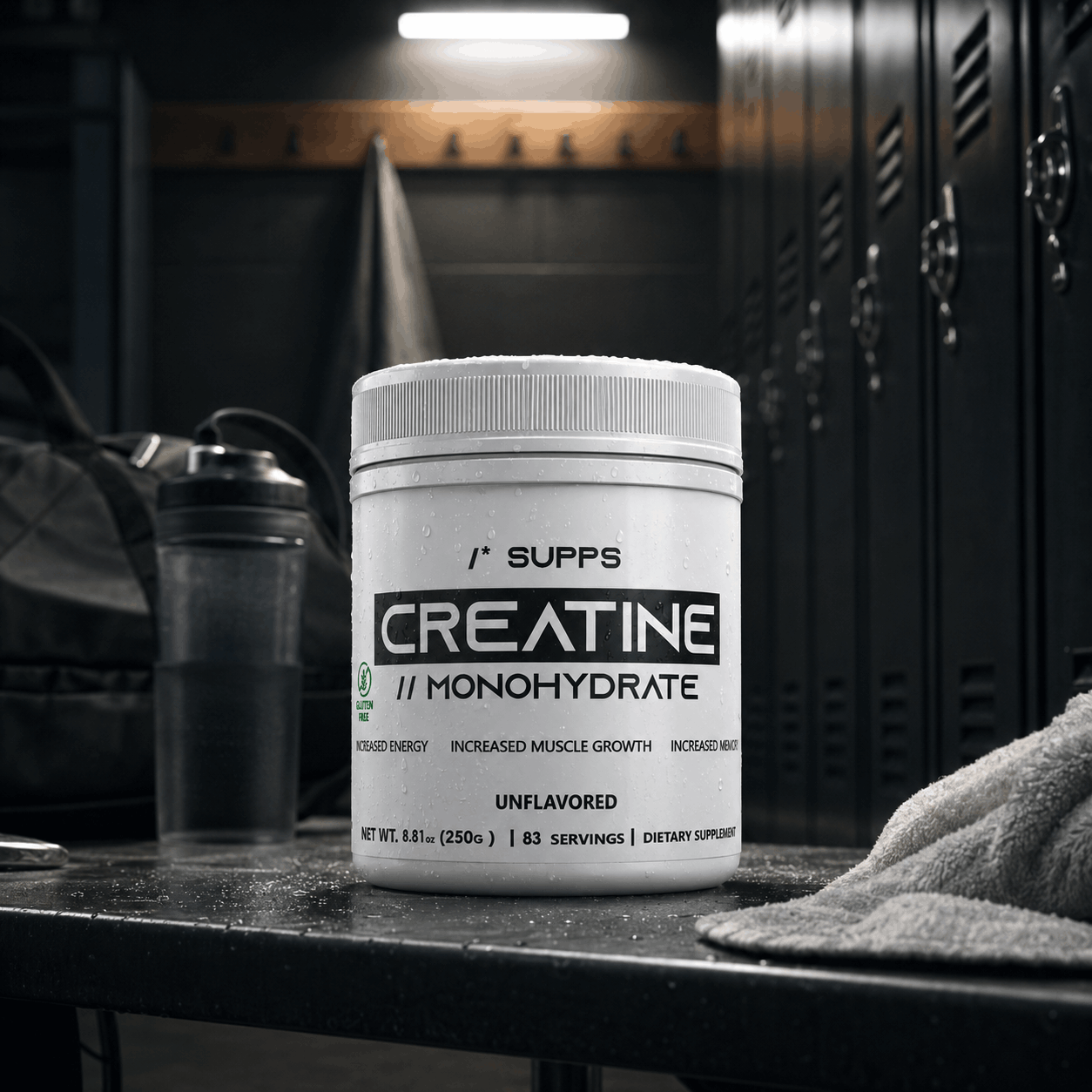
Creatine Benefits: The Complete Science-Backed Guide for Muscle, Brain & Performance
You train hard, eat clean, and sleep on time — yet your lifts have stalled, your recovery drags, and you feel mentally foggy on back-to-back workout days. If this sounds familiar, the missing variable in your stack might be the most researched sports supplement ever studied. Creatine is not a trend. With over 500 peer-reviewed studies backing its safety and efficacy, creatine benefits extend far beyond the gym floor — from explosive muscle gain to sharper cognitive function. Whether you are a beginner lifter in Delhi, a competitive athlete in Mumbai, or simply someone who wants more energy and mental clarity, this guide breaks down everything you need to know — no filler, no hype, just evidence.
What Is Creatine and Why Do Its Benefits Matter?
Creatine is a naturally occurring compound synthesised in the liver, kidneys, and pancreas from three amino acids: arginine, glycine, and methionine. Around 95% of the body's creatine is stored in skeletal muscle as phosphocreatine (PCr), with the remaining 5% distributed across the brain, heart, and testes.
Your body produces roughly 1–2 g of creatine per day. Omnivores absorb an additional 1–2 g through red meat and fish. However, muscle creatine stores are typically only 60–80% saturated at baseline — meaning there is a significant and exploitable performance gap that supplementation can close.
When you supplement with creatine, you fill that gap. Fully saturated stores translate to more energy available for high-intensity effort, faster recovery between sets, greater training volume, and — as emerging research shows — measurable improvements in brain function. The creatine benefits you experience are directly tied to how well-stocked your phosphocreatine system is at the cellular level.
👉 Want to know exactly how much creatine your body needs? Use the HereMySupps Creatine Intake Calculator to get a personalised dose in seconds.
How Creatine Works: The Science Behind the Benefits
To understand creatine benefits, you must understand the ATP-PCr energy system. Adenosine triphosphate (ATP) is the body's universal energy currency. During a heavy squat, a 100 m sprint, or an explosive jump, your muscles consume ATP faster than aerobic metabolism can regenerate it. This is where phosphocreatine steps in.
Phosphocreatine donates a phosphate group to ADP (adenosine diphosphate), regenerating ATP almost instantaneously. This system powers maximal efforts lasting 1–10 seconds. The more phosphocreatine you have in reserve, the more ATP can be rapidly regenerated — enabling you to lift heavier, sprint faster, and recover more completely between sets.
Beyond energy metabolism, creatine also:
- Increases intramuscular water retention, creating a cell-volumising effect that signals anabolic pathways
- Reduces myostatin expression, a protein that limits muscle growth
- Buffers lactic acid accumulation, delaying the onset of fatigue
- Supports satellite cell activity, accelerating muscle repair after training
- Crosses the blood-brain barrier, replenishing neuronal energy stores and supporting neurotransmitter synthesis
Creatine monohydrate — the most studied form — achieves all of this at a price point accessible to every Indian fitness enthusiast. It is not a stimulant, it is not a steroid, and it does not manipulate hormones. It is pure cellular bioenergetics.
Proven Creatine Benefits: What the Research Actually Shows
-
Increased Muscle Strength and Power Output
A 2003 meta-analysis published in the Journal of Strength and Conditioning Research analysed 22 studies and found that creatine supplementation produced an average 8% increase in strength and a 14% improvement in power output compared to placebo. For a lifter with a 100 kg squat, that could mean breaking through to 108 kg without any additional training variable changed. -
Enhanced Muscle Mass and Body Composition
Creatine drives muscle hypertrophy through multiple pathways: increased training volume (more reps per set), cell volumisation that triggers protein synthesis signals, and reduced protein breakdown during recovery. Studies consistently show 1–2 kg of lean mass gains over 4–12 weeks of supplementation when combined with resistance training. For the Indian gym-goer eating a moderate protein diet, this is a meaningful compounding effect. Read the full breakdown in our guide on which creatine is best for muscle gain. -
Faster Recovery Between Sets and Sessions
By accelerating phosphocreatine resynthesis, creatine reduces the rest time needed between high-intensity efforts. In practical terms, if you previously needed 3 minutes between heavy sets, creatine can allow you to perform comparably with 2 minutes. Over a week of training, this compounds into significantly more total volume — the primary driver of hypertrophy. -
Cognitive Performance and Brain Health
One of the most exciting and underappreciated creatine benefits is its effect on the brain. The brain is an energetically expensive organ, consuming roughly 20% of the body's total energy despite being only 2% of its mass. Research from the University of Sydney demonstrated that creatine supplementation improved working memory and processing speed in healthy adults. Effects are strongest in populations with lower baseline creatine stores — vegetarians, sleep-deprived individuals, and older adults. Creatine may also play a protective role in traumatic brain injury recovery and neurodegenerative disease. -
Reduced Muscle Damage and Inflammation
Post-exercise creatine kinase (a marker of muscle damage) is consistently lower in creatine-supplemented subjects. This means less soreness, faster return to training, and lower systemic inflammation — particularly valuable during high-frequency training blocks common in Indian competitive sports like wrestling, kabaddi, and cricket preseason conditioning. -
Support for Aging Muscle (Sarcopenia Prevention)
Muscle mass declines at roughly 3–8% per decade after age 30. Creatine supplementation in older adults, combined with resistance training, has been shown to significantly attenuate this decline, preserve functional strength, and improve bone mineral density. For Indians approaching their 40s and 50s, this is one of the most cost-effective longevity interventions available. -
Improved High-Intensity Endurance
Creatine is not just for strength athletes. Sports involving repeated sprint efforts — football, basketball, badminton — rely heavily on the ATP-PCr system. Creatine supplementation improves repeated sprint ability and reduces performance decrements over successive bouts, providing a meaningful edge in team sport settings.
Creatine Side Effects and Safety: Separating Fact from Fiction
Creatine is among the safest supplements ever studied in human subjects. Long-term studies up to 5 years of continuous use have found no adverse effects in healthy individuals. However, it is worth addressing the myths head-on.
Kidney damage: This myth originated from a single case study involving an individual with pre-existing renal disease. In healthy individuals with normal kidney function, creatine supplementation does not impair kidney markers. Serum creatinine (a kidney waste product) may rise slightly — but this is a non-pathological response to increased creatine metabolism, not organ damage.
Hair loss: One study found a temporary increase in DHT (dihydrotestosterone) in rugby players using creatine. DHT is associated with androgenic alopecia in genetically predisposed individuals. The evidence is limited to a single study and has not been replicated, but those with a strong family history of male-pattern baldness may wish to monitor this.
Water retention and bloating: Initial weight gain of 0.5–1.5 kg in the first week is almost entirely intracellular water — water drawn into muscle cells, not subcutaneous fat. This is a productive physiological adaptation, not cosmetic bloating. Loading protocols increase the likelihood of GI discomfort; maintenance dosing eliminates this almost entirely.
Dehydration and cramping: The opposite is true. Creatine increases intramuscular water storage, which supports hydration at the cellular level. Studies in American football players and athletes training in heat found no increased cramping with creatine use.
For a full myth-busting deep-dive, read: Creatine Benefits and Myth Bust.
Who Should Use Creatine — and Who Should Be Cautious
Ideal candidates for creatine supplementation:
- Resistance training athletes aiming for strength or hypertrophy
- Team sport athletes (football, basketball, kabaddi, cricket)
- Vegetarians and vegans (dietary creatine intake is near zero)
- Adults over 40 looking to preserve muscle mass and cognitive function
- Students or knowledge workers experiencing mental fatigue and cognitive load
- Anyone in a caloric deficit trying to preserve lean tissue
Who should consult a doctor before use:
- Individuals with diagnosed kidney or liver disease
- Those on medications that affect renal function (e.g., NSAIDs, diuretics)
- Pregnant or breastfeeding women (insufficient safety data exists)
- Children under 18 (not due to proven harm, but due to limited paediatric data)
For the vast majority of healthy Indian adults, creatine monohydrate at standard doses is safe, effective, and economical. It costs roughly ₹1,000–₹2,000 per month and delivers measurable results within 2–4 weeks.
Best Creatine Usage Guide: Dosage, Timing, and Protocol
There is no single "perfect" protocol, but the following evidence-based guidelines cover the most practical approaches. Use the Creatine Intake Calculator to determine your personal maintenance dose based on body weight.
| Protocol | Phase | Daily Dose | Duration | Best For |
|---|---|---|---|---|
| Loading + Maintenance | Loading | 20 g/day (4 × 5 g doses) | 5–7 days | Athletes who want fast saturation |
| Maintenance | 3–5 g/day | Ongoing | Maintaining saturated stores | |
| Gradual Maintenance Only | Maintenance | 3–5 g/day | 28 days to saturation | Sensitive stomachs, beginners |
| Body-Weight Dosing | Maintenance | 0.03–0.05 g per kg bodyweight | Ongoing | Precision dosing for advanced users |
Timing: Creatine has no meaningful acute effect, so timing is far less important than consistency. Post-workout timing with a carbohydrate-protein meal may marginally improve uptake due to insulin-mediated transport, but any time of day works. Take it daily — including rest days — to maintain saturation.
Form: Creatine monohydrate remains the gold standard. It is the most studied, cheapest, and most bioavailable form. Micronised creatine monohydrate mixes better in water and is equally effective. Creatine HCl, ethyl ester, and buffered forms offer no proven benefit over monohydrate at equivalent doses.
Stacking: Creatine pairs well with protein (whey or plant-based), beta-alanine for endurance athletes, and caffeine (though some older studies suggested competition between caffeine and creatine — newer evidence does not confirm this). No need for cycling; continuous use is well-tolerated.
👉 Ready to start? Explore lab-tested creatine options at HereMySupps Creatine Store.
Creatine vs Other Performance Supplements: Honest Comparison
| Factor | Creatine Monohydrate | Beta-Alanine | BCAAs | Pre-Workout (Caffeine-based) |
|---|---|---|---|---|
| Primary Benefit | Strength, power, muscle mass, cognition | Muscular endurance (3–10 min efforts) | Protein synthesis support, anti-catabolism | Acute energy, focus, pump |
| Evidence Level | ⭐⭐⭐⭐⭐ (500+ studies) | ⭐⭐⭐⭐ (solid, moderate evidence) | ⭐⭐⭐ (redundant if protein is adequate) | ⭐⭐⭐⭐ (caffeine is well-studied; blends vary) |
| Onset of Effect | 2–4 weeks (gradual) / 7 days (loading) | 2–4 weeks (beta-alanine loading) | Immediate (acute dose) | 30–60 minutes (acute) |
| Suitable for Vegetarians | ✅ Especially beneficial | ✅ | ⚠️ Many are whey-derived | ✅ (check label) |
| Tolerance / Dependency | None | None | None | Caffeine tolerance builds rapidly |
| Monthly Cost (India) | ₹800–₹1,500 | ₹1,200–₹2,000 | ₹1,500–₹3,000 | ₹1,500–₹4,000 |
| Cognitive Benefit | ✅ Significant | ❌ None established | ❌ Minimal | ⚠️ Acute only (caffeine-driven) |
| Verdict | Best overall ROI for most athletes | Good add-on for endurance athletes | Skip if protein intake is adequate | Useful for training motivation; not a foundation |
Frequently Asked Questions About Creatine Benefits
1. Does creatine cause weight gain?
Yes — but it is lean mass and intracellular water, not fat. In the first week, expect 0.5–1.5 kg of scale weight increase due to water being drawn into muscle cells. Over 8–12 weeks of training, the additional lean mass gain is a direct result of improved training capacity and anabolic signalling — both productive outcomes for any physique or performance goal.
2. Is creatine safe for Indians who eat vegetarian or vegan diets?
Creatine is especially beneficial for vegetarians and vegans. Plant-based diets contain virtually zero dietary creatine (it is found almost exclusively in meat and fish). As a result, baseline muscle creatine stores in vegetarians are typically lower — meaning the performance and cognitive gains from supplementation are often more pronounced in this population.
3. Does creatine work for women?
Absolutely. Creatine benefits are not sex-specific. Women respond similarly to men in terms of strength gains, lean mass improvements, and recovery. Women also have lower baseline creatine stores, potentially making them more responsive. Additionally, emerging research suggests creatine may play a role in mitigating hormonal fluctuations and supporting bone health during perimenopause.
4. Can I take creatine without working out?
You can, but the benefits will be significantly reduced. Creatine's muscle and strength benefits are exercise-dependent — they occur because higher phosphocreatine availability enables greater training stimulus. The cognitive benefits (improved memory, processing speed) do not require exercise and are achievable through supplementation alone, which is relevant for students and desk workers.
5. Which creatine form is actually best?
Creatine monohydrate. The marketing around newer forms (HCl, ethyl ester, Kre-Alkalyn, buffered creatine) consistently outpaces the science supporting them. No head-to-head study has demonstrated superiority over monohydrate at equal doses. Micronised creatine monohydrate offers better mixability with the same efficacy profile. Save your money on the fancy variants and invest in a quality monohydrate — like the options available at HereMySupps.
Conclusion: Start Simple, Stay Consistent
The creatine benefits stack up across every dimension of physical and cognitive performance: raw strength, explosive power, lean muscle accumulation, faster recovery, brain energy, and even long-term muscle preservation as you age. No other supplement in the sports nutrition market delivers this breadth of evidence-backed outcomes at such a low cost and with such a robust safety profile.
For the Indian athlete, fitness enthusiast, or health-conscious professional — vegetarian or omnivore, 22 or 52 — creatine monohydrate is the single supplement most likely to move the needle.
Your actionable takeaway: Start with 3–5 g of micronised creatine monohydrate daily, taken consistently at any time with your largest meal. Use the Creatine Intake Calculator to personalise your dose, and reassess your performance benchmarks at the 4-week and 8-week marks. The results, for most people, speak for themselves.
Want to go deeper? Explore our companion guides: Which Creatine Is Best for Muscle Gain and Creatine Benefits and Myth Bust — both written with the same evidence-first standard you just read.